

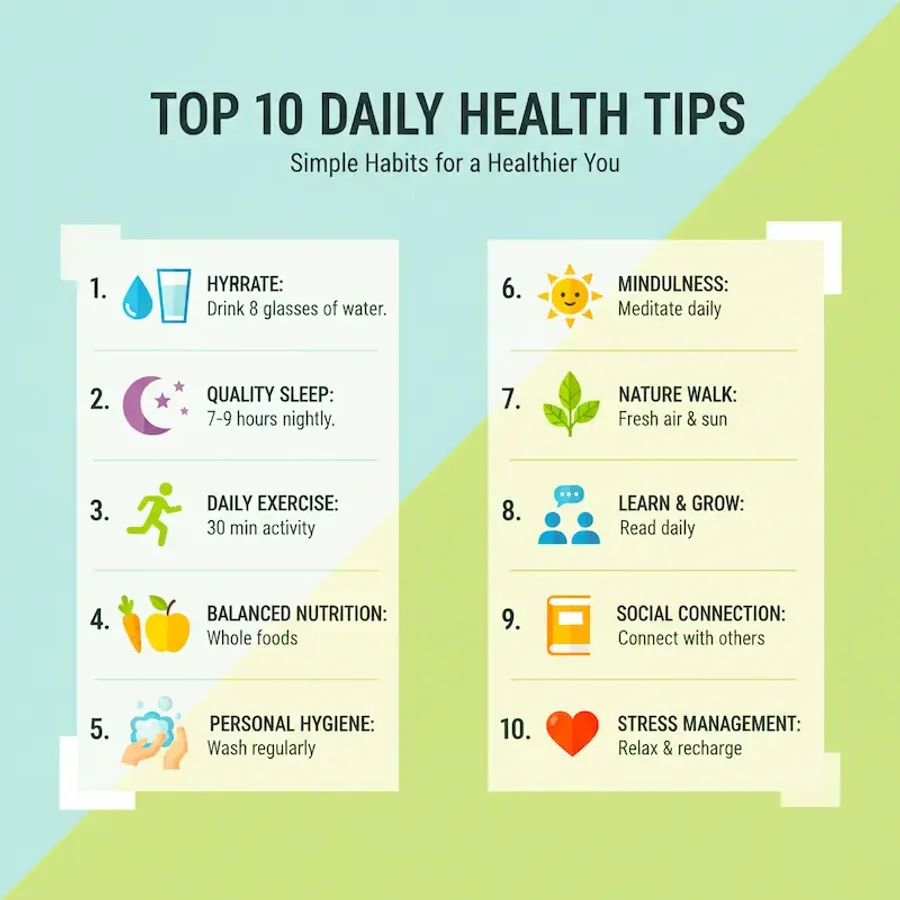
Most people don’t wake up one day and completely overhaul their life. Real change usually happens in small pieces — a better morning, a little less stress, a bit more sleep — that slowly add up over weeks and months. The problem is that when everything feels like it needs fixing at once, it’s hard to know where to actually begin.
If that sounds familiar, here’s a simple way to think about building a healthier routine: pick one area at a time, get it reasonably stable, and then move to the next.
Start With How Your Day Begins
The first hour after waking up tends to set the tone for everything that follows. A rushed, chaotic morning usually leads to a stressed, reactive day, while a calmer start — even just ten extra minutes — tends to carry forward. If mornings currently feel like a scramble, our morning routine guide walks through some realistic, low-effort changes that actually make a difference without requiring you to wake up at 5 a.m.
Fix Sleep Before Anything Else
It’s tempting to focus on daytime habits first, but poor sleep quietly undermines almost everything else — energy, mood, focus, even how much willpower you have to stick to other changes. If falling asleep or staying asleep has been a struggle, it’s worth addressing before layering on new habits elsewhere. Our guide on how to fall asleep faster covers the basics that make the biggest difference.
Build in Small Pockets of Focus
Once mornings and sleep feel more stable, productivity tends to improve almost on its own, but a few extra habits help it along. Things like tackling your hardest task first or protecting blocks of uninterrupted time can meaningfully change how much gets done in a day without requiring longer hours. We go through this in more detail in our daily productivity habits guide.
Don’t Ignore Stress Just Because It’s Not an Emergency
Stress has a way of getting pushed aside because it doesn’t feel urgent the way a deadline does, but left unmanaged, it eventually affects sleep, focus, and mood all at once. Building in small stress-relief habits — deep breathing, short breaks, actually talking to someone when things pile up — matters more than it gets credit for. Our guide on reducing stress in daily life has a few practical starting points.
Make Food Simpler, Not Perfect
Eating well often gets treated like an all-or-nothing project, which is usually why it doesn’t stick. A more realistic approach is having a few reliable, low-effort meals ready to go instead of aiming for a perfectly varied menu every day. If cooking during the week feels like a constant scramble, our meal prep guide for beginners breaks down a version of this that doesn’t require a full Sunday of cooking.
Let Your Habits Save You Money Too
A lot of healthy habits and financial habits actually overlap more than people expect — cooking at home instead of ordering out, buying only what you’ll use, being more intentional with spending in general. If tightening up your budget is part of the goal too, our guide on saving money on a tight budget pairs well with a lot of the habits already mentioned here.
Small Sustainability Habits Fit In Naturally
Once a routine starts feeling more manageable, small sustainability habits — reducing kitchen waste, reusing what you already have — tend to fit in without much extra effort, since a lot of it overlaps with cooking and shopping habits you’re already adjusting. If that’s an area of interest, our guide on building a zero-waste kitchen covers some easy starting points.
Give It Time, One Piece at a Time
The biggest reason routines fail isn’t lack of willpower — it’s trying to change everything simultaneously. Picking one area, letting it become close to automatic, and then moving to the next tends to actually stick, where a total overhaul usually doesn’t survive past the first difficult week.
The Bottom Line
A healthier daily routine isn’t built overnight, and it isn’t built by changing everything at once either. Start with whichever area feels most broken right now — sleep, mornings, stress, food, or spending — get that reasonably steady, and let the rest follow gradually. Small, consistent changes across a few areas of life tend to add up to something that actually lasts.